The teachers
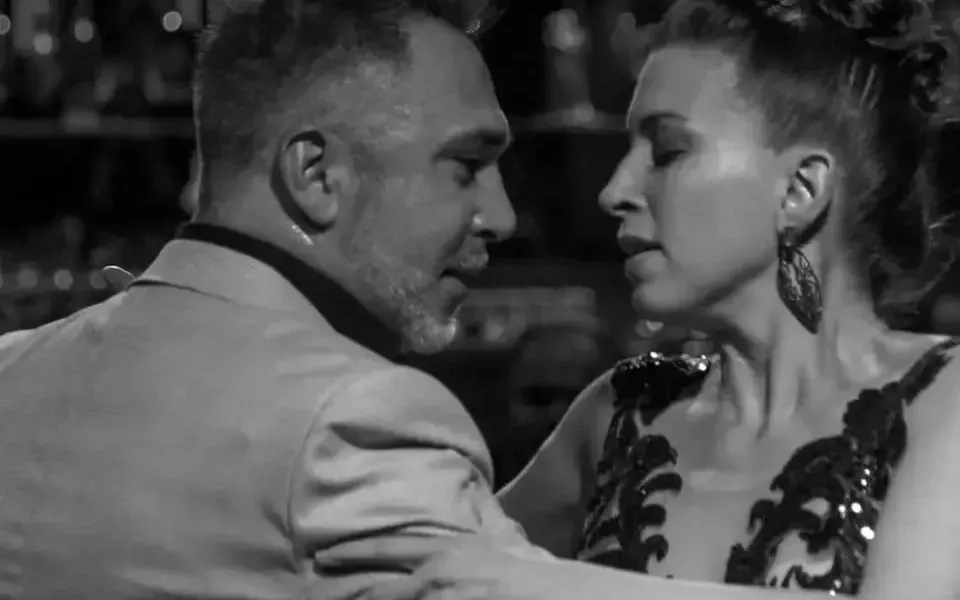
Alejandro Larenas & Marisol Morales
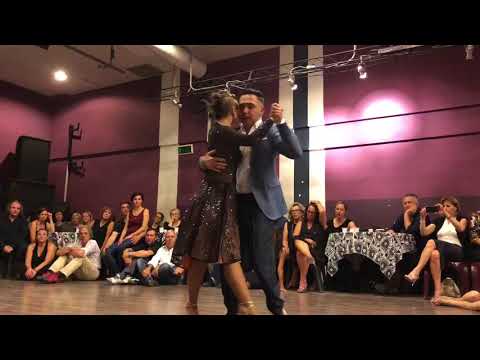
Argentine dancers, teachers and researchers of tango. They have directed TANGart Athens since 2019.
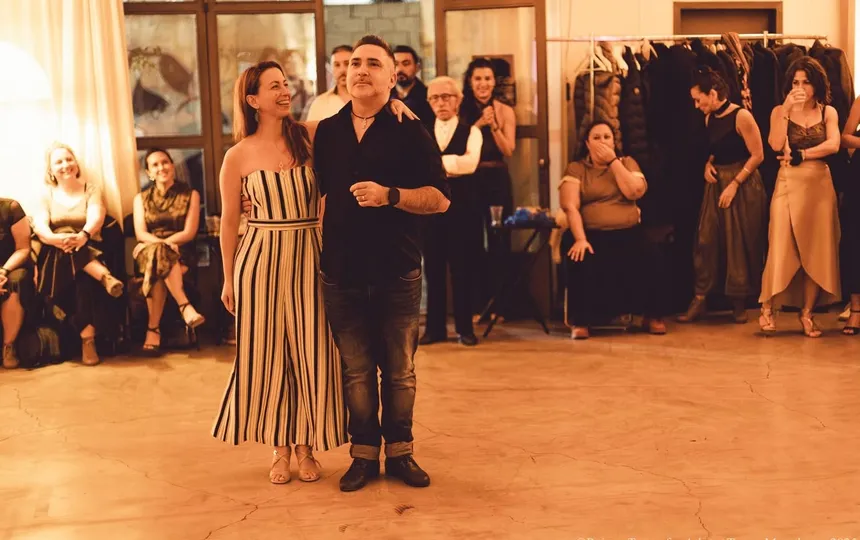
Partners on the floor since 2004. They have taught in more than 25 countries across Europe, North America, Asia, Australia and Argentina, and what travels with them is a way of working rather than a repertoire of figures.
Their teaching starts with the body: balance, alignment, the way the skeleton is organised. From there it builds towards what actually makes tango tango, improvisation inside the embrace and musicality that goes well beyond keeping time. There are no figures to memorise.
They treat tradition as ground to stand on rather than a museum. What they teach on a Wednesday can be danced that same night at a milonga, in Athens or in Buenos Aires.
- 27+years in tango
- 25+countries taught in
- 2004together as a couple
- 2019in Athens
How they teach
The body first, the dance second
Every class starts from something you can feel and control: your axis, your weight, the quality of your contact. Figures are the last step, not the first.
Understanding over memorising
You learn why a movement works, not the order the steps come in.
The body first
Balance, axis, alignment. Whatever is built on those holds up.
Improvisation at the core
From the first class you are dancing, not executing choreography.
Musicality beyond the beat
Di Sarli is not danced like D'Arienzo. You will learn to hear the difference.
Their story
It did not begin on a stage
Two doors into the same dance
Long before we knew each other, we were both looking for a way to say something we could not yet put into words. We found it in 1998, at almost the same moment but in two different cities: Marisol in Rosario, Alejandro in Buenos Aires.
Marisol grew up inside the theatre. Her mother is a director, and her childhood was spent among plays and creative people of every age. She was looking for an expression that could be entirely her own, and one without words. Then she saw a couple dancing tango in a performance and fell in love with a dance that seemed able to hold every emotion at once: joy, nostalgia, tenderness, loss. Soon she was travelling from Rosario to Buenos Aires to learn, and by eighteen she had moved there. Tango is Argentine, but living it in Buenos Aires is another thing entirely. It is in the music, the language, the neighbourhoods, the humour, the generations gathered around one table. A culture still alive.
Alejandro came through a different door. After a hard breakup, he went looking for something social, something to get him dancing and meeting people. He walked in for a salsa class. But in the room next door, they were teaching tango. You could arrive after a wonderful day and dance. You could arrive after a terrible day and dance that too. You did not have to explain anything: the music, another person and an embrace were enough.
Our paths finally crossed in 2004. Since then we have never stopped asking questions about the same dance, because for us tango has never been about collecting steps. It is a language. You learn its structure so that one day you can speak with your own voice, listening to the music and deciding together, in real time. Every dance happens only once. Perhaps that is why, after all these years, we are still curious.
Why Athens
Tango brought us to Greece for the first time in 2008, and something felt familiar almost at once. The hours spent over a single coffee. The table shared with friends. The humour, the intensity, that creative stubbornness when things do not go according to plan. One night we went to hear rebetiko, and in those songs, those faces, that atmosphere, we recognised something. We found tango there. Not the same history or the same music, but the same emotion, taken and danced in an embrace. A bridge between where we came from and where we had arrived.
Athens became home. We still travel and perform, but we always come back. Through TANGart we try to make the kind of place tango once gave us: somewhere you can learn seriously, but also meet, experiment, belong and grow. Because a tango school, for us, cannot only be a place where people learn to dance. It has to be a place where something human happens.
What tango is, for us
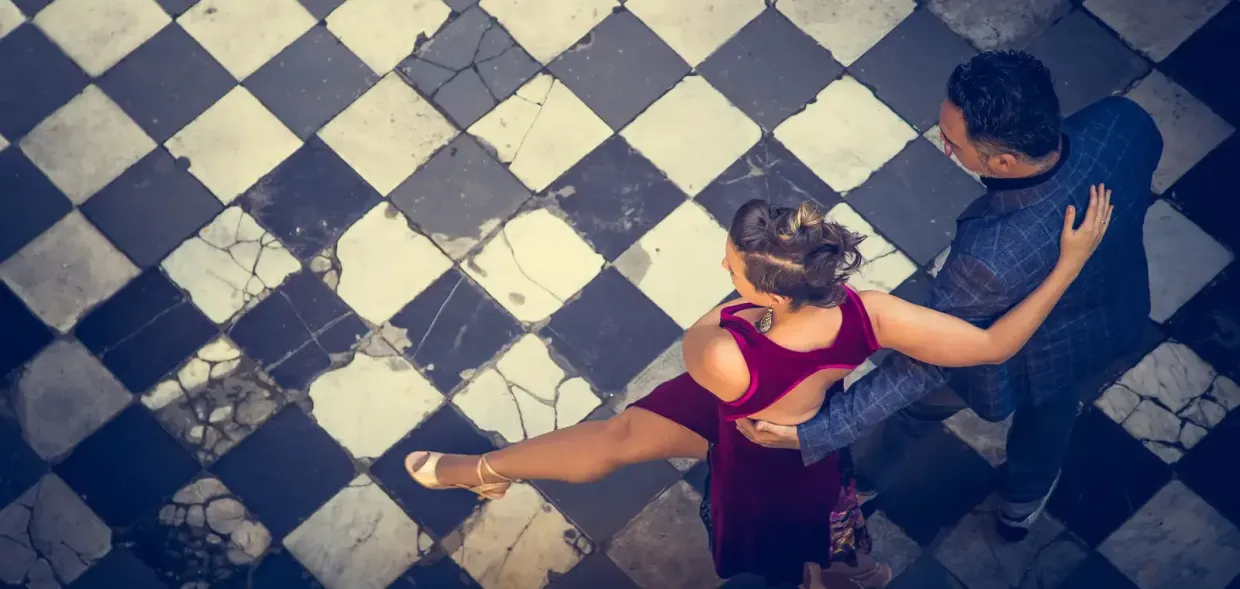
That, more than anything, is what tango means to us. Of course it is music, movement, technique, an embrace. But it is also what passes between people: a story, an opportunity, a dance offered to a beginner, sometimes a pair of shoes. And years later, without knowing when or where, you find yourself passing the gesture on to someone else.
That is community. That is culture when it is alive. And for us, that is tango.
On stage